



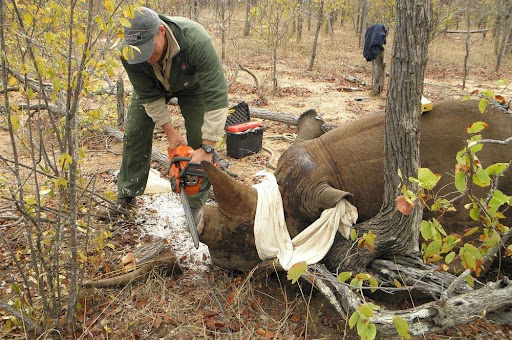
Rhino conservationists in South Africa have discovered a new way to save one of the world’s most endangered animals: removing their horns. In the Greater Kruger region, where poachers have killed thousands of rhinos for the black market value of their horns, scientists studied what happened when reserves began cutting the horns off rhinos in a safe, controlled way. The results were really incredible. According to the research, poaching dropped by about 78% in the places that used dehorning. Even more striking, this huge drop came from an intervention that used only a tiny share of the overall anti-poaching budget.
To understand why this works so well, it helps to know why rhinos are targeted in the first place. Rhino horns are sold illegally for enormous sums. Poachers kill rhinos to get the horn, which is then trafficked internationally by criminal networks. In the 11 reserves studied between 2017 and 2023, nearly 2,000 rhinos were poached, despite rangers, patrols, dogs, helicopters, and expensive surveillance systems. Conservation groups and governments have spent tens of millions of dollars trying to fight these crimes. But even with all that effort, rhinos kept dying at very high rates.
That’s why the study’s discoveries are so important. The researchers examined eight reserves that dehorned more than 2,000 rhinos. When rangers removed most of a rhino’s horn(always under sedation and with careful monitoring) the animal became a much less valuable target. Poachers often search for quick rewards, and without a full horn to sell, they are less willing to take the risk.
Still, the process isn’t perfect. A small stump of the horn must be left behind to protect the part where the horn grows. Some poachers will still kill a dehorned rhino just to get this small piece, so dehorning does not make an animal completely safe. The horn also grows back over time, so conservation teams must repeat the procedure every year or two, which means catching, sedating, and monitoring the rhino again. All of this takes trained teams, careful planning, and a lot of money. The more often any animal is sedated, the greater the risk there is to that animal’s life.
There are also questions about whether removing the horn affects a rhino’s behavior. Rhinos use their horns for many natural purposes: defending themselves, caring for their young, and digging for food or water. So far, studies have not found major long term problems, but scientists say they need more research to be sure, especially for the more solitary black rhino, whose social patterns are different from white rhinos. Everyone agrees that it would be best if rhinos could live with their horns as nature intended, but for now, removing them may be the difference between life and death.
Another important point the researchers highlighted is that dehorning does not fix the deeper problems behind poaching. The demand for rhino horn, the poverty that pushes some people into poaching, and the criminal groups that run trafficking networks all remain threats. Dehorning is a way to reduce losses right now while countries and conservationists work on these bigger, longer-term challenges.
The researchers behind the study say they hope their findings will encourage more reserves to consider dehorning as part of a wider protection plan. They also hope the evidence helps governments and communities see that preventing poaching isn’t only about catching criminals. It can also be about removing the very thing that makes poaching profitable in the first place and saving countless animals’ lives.


