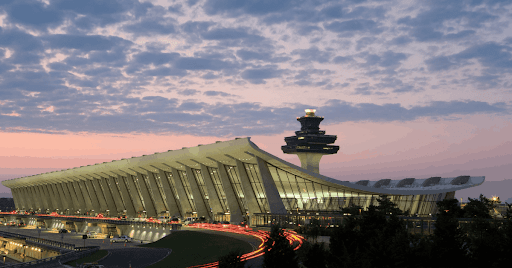
Dulles Airport has become the latest focus of President Donald Trump’s goal to reshape Washington D.C’s architecture. Even as the airport continues with their multi-billion dollar plan to modernize, the government pushes a separate plan to redesign the facility which they claim is in a “state of disrepair.”
The Department of Transportation (DOT) has recently begun seeking many different kinds of proposals from architects, engineers, and private developers to redesign Dulles. According to the transportation secretary, Sean Duffy, the goal is a “complete refresh” that will transform Dulles into a “premier international gateway” worthy of the nation’s capital.
“Tourists, world leaders, and CEOs from around the world should not be forced to travel through an inefficient airport,” Duffy stated.
In the formal request released by the federal register, the airport’s lasting “fuel smell,” limited the number of gates, and the use of mobile lounges to transport passengers were some of the main critiques of the airport and signifies why Dulles is “no longer an airport suitable and grand enough for the capital.”
This new initiative directly challenges the airport’s future as the Metropolitan Washington Airports Authority (MWAA) heads all renovations. Dulles is already deep into an almost $7 billion improvement plan. There is even a new $580 million concourse for United Airlines that is under construction and scheduled to open next fall. The long-term plan also includes runway work, security upgrades, and other improvements.
On the other hand, the DOT describes these efforts as “insufficient,” specifically targeting the use of mobile lounges, otherwise known as “people movers.”
A MWAA spokesperson has come out and said that they are thankful for the “administrations interest” and welcomes new ideas, but emphasized their desire to continue with the plan that is already in place.
The move to overhaul Dulles aligns with President Trump’s broader campaign to leave a physical imprint on the D.C. area. This can be seen with his proposed projects like the new White House ballroom and a monumental arch named after him near the Lincoln Memorial.
The future of Dulles Airport’s renovations now hinges on the potential of a collaboration between the local and federal authorities in charge. The outcome will determine the travel experience for the millions of passengers that go through Dulles.