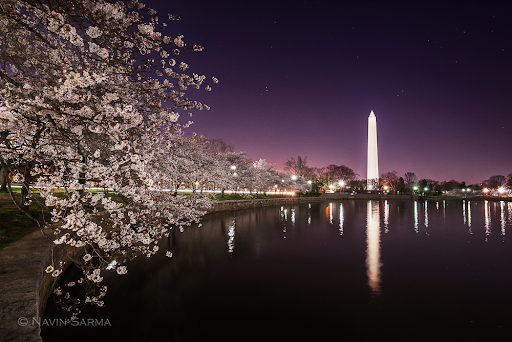
Have you noticed the white and pink petals in the air over the past few days? This means it is finally this time of the year! The iconic cherry blossoms surrounding the D.C. area have officially reached peak bloom, resulting in the nation capital’s beautiful spring scenery.
The National Park Service (NPS) announced on March 26 that the famous Yoshino cherry trees have hit their most vibrant stage, defined as when at least 70% of the flowers are open. While officials had initially predicted that peak bloom would occur between March 29 and April 1, a stretch of warm weather pushed the blossoms, accelerating the process.
The story behind the cherry blossom trees is one of international friendship that the district is known for with this one dating back more than a century. The first trees were a gift from the people of Japan to the United States in 1912 as a symbol of the growing friendship between the two nations.
On March 27, 1912, First Lady Helen Taft and the Viscountess Chinda, wife of the Japanese ambassador, planted the first two Yoshino cherry trees on the northern bank of the Tidal basin. Those two original trees are still standing till this day, 114 years later.
Over the years, the gesture has been renewed with additional gifts, and the trees have become a cherished part of D.C.’s identity. Even during the tensions between the U.S. and Japan during World War II, parts of the Washington trees were sent back to Japan after the war to help restore the country’s collection that were destroyed during the bombings.
The 2026 bloom is significant as it coincides with the National Cherry Blossom Festival, which runs from March 20 through April 12. This year’s festival integrates special events recognizing America’s 250th anniversary, including themes of history and diplomacy into the celebrations.
If you are planning to visit the city to see the flowers, experts advise to go as soon as possible as the peak bloom period typically lasts only a few days. The weather also plays an important role as just some rain would cause the delicate petals to fall very quickly.
To make the most of your visit, experts say the number one rule is to not drive as the parking near the Tidal basin is extremely scarce with heavy traffic. Instead, officials recommend taking the Metro instead. The Smithsonian and L’Enfrant stations are the most convenient options.
Due to the crowded nature of the Tidal Basin, timing is so important. In order to beat the crowds, it is recommended that you either go very early in the morning, around sunrise, or later in the evening, after sunset.
If the Tidal Basin still feels too packed, consider exploring alternatives like East Potomac Park or the U.S. National Arboretum, which all offer beautiful blossoms with less foot traffic.
The National Cherry Blossom Festival is packed with events for all ages, including the Blossom Kite Festival on March 28 at the Washington Monument grounds, where you can bring a kite or just come to watch the sky fill up. There is also a Petalpalooza event on April 4 at the Capitol Riverfront, consisting of a day with live music and art installations, ending with a fireworks show over the Anacostia River.
The National Tree Blossom Festival parade on April 11 is located on Constitution Avenue. This event is a grand finale for the Cherry Blossom season, featuring giant helium balloons, floats, and even marching bands.
For students and families, the blossoms offer a powerful lesson in history, international relations, and the beauty of nature. Whether you go for the photos, festivals, or just to enjoy the warm weather, the cherry blossom season is a reminder to appreciate some of the most beautiful moments in life while they last.