In only their first year of high school, both freshmen Gabriele Bouwma and Theo Moreno-Hines took first place in South Lakes’ annual science fair, with each of their respective projects involving topics they learned about outside of the classroom.
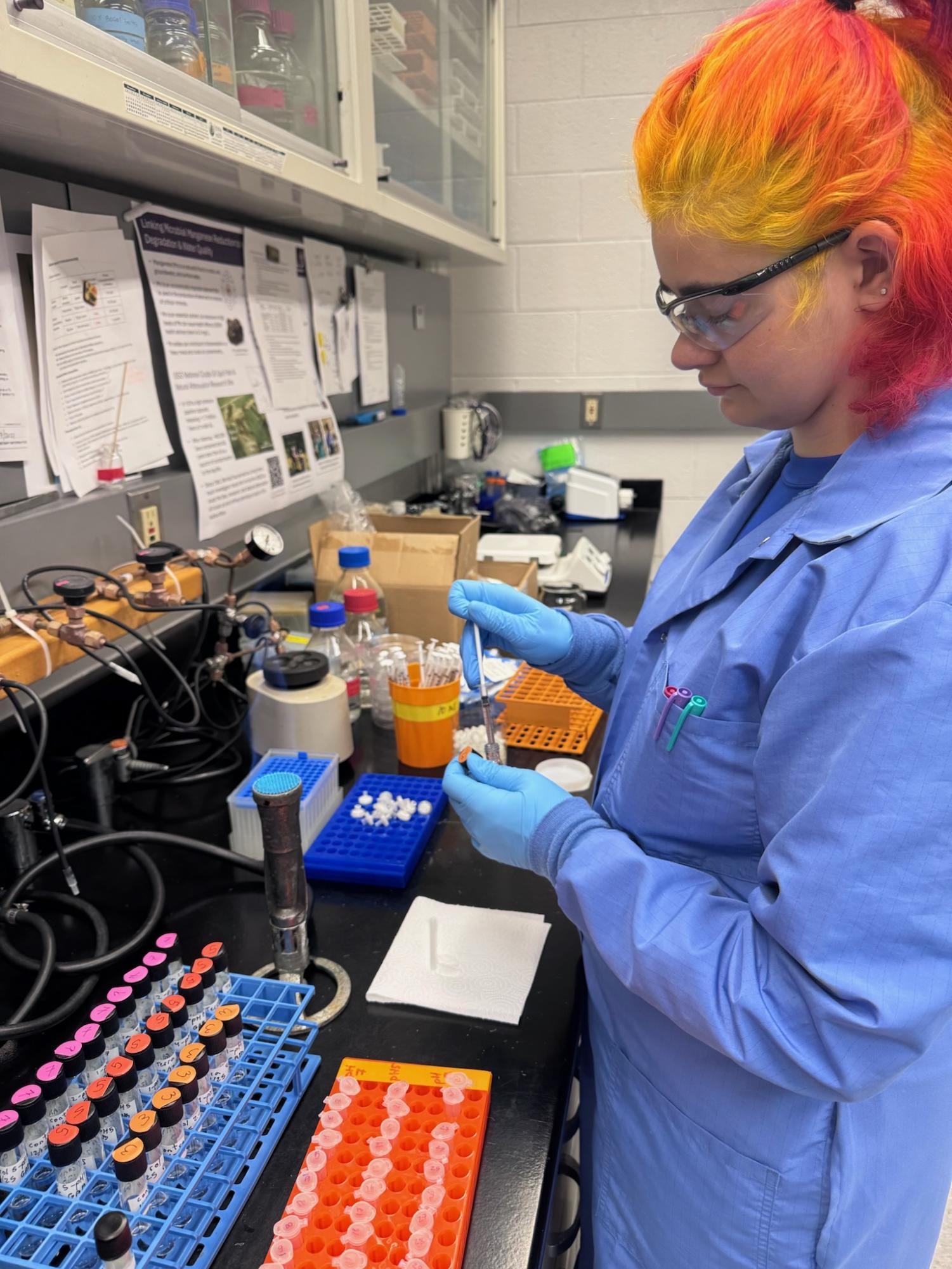
Bouwma, who has demonstrated her interest in environmental microbiology long before high school, wowed the judges with her experiment on the effect of pH on manganese-oxidising bacteria, which she conducted in a local lab.
“My experiment was about Terrabacter, which is a species of bacteria that oxidizes manganese. They were sampled by the Reston microbiology lab in the U.S. Geological Survey from an acid mine draining site, and I isolated them last year,” they said. “This year, I wanted to experiment with them to see how they could be used in real life.”
Having a vast amount of knowledge in the subject through her work as an intern, she recognized the real-world implications of their experiment. She explained how it can provide data about the effectiveness of the organisms’ ability to produce manganese oxide, which can improve the environment.
“Manganese oxide can be used to clean up heavy metals from wastewater sites; during its formation it can bind to things like lead and arsenic, so these organisms that make it can be introduced to a water system and make the ecosystem safer,” she said.
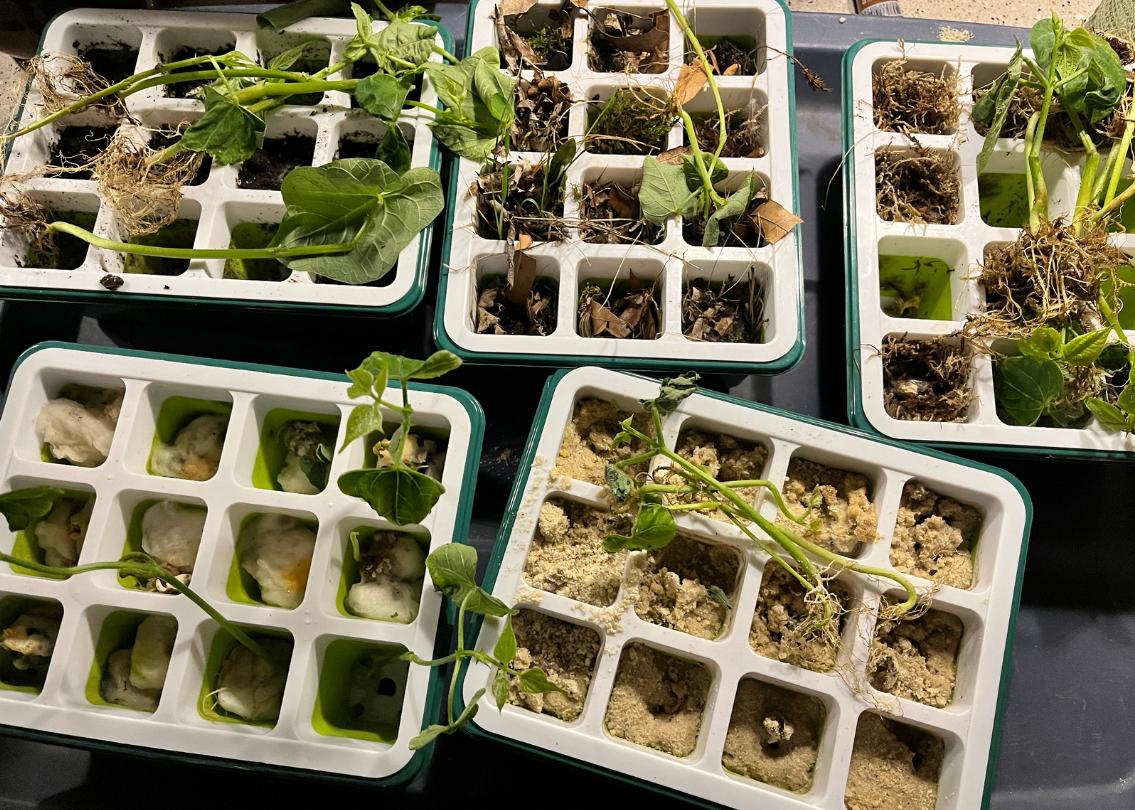
Moreno-Hines, on the other hand, decided to focus his project on plant science, a topic that he was excited to learn more about. He observed data from over 60 trials to determine the effect of growing medium on the growth of bush bean plants.
“My growth mediums were soil, sand, cotton balls, moss, and yard compost, and I measured the 12 trials of each every three days for three weeks,” he said. “Soil was the most effective, while cotton balls were the least because it has no nutrients.”
Moreno-Hines elaborated on his project’s real-world implications, which provided essential agricultural data for different regions of the world.
“It can explain how [plants] grow in different regions,” he said. “[For example], there’s thin grass in Northern Virginia, which has a mix of soil, while there’s thicker grass in other places that have clay soil. [There are] different kinds of soil everywhere with different levels of nutrients, and it shows differences between environments.”
In their first science fairs ever, both freshmen were proud of their presentations and had a great experience. Moreno-Hines enjoyed displaying his board and participating in the same competition as his friends, though the fair also lent itself to some challenges, especially as a freshman.
“Talking [to judges] and competing against [older] kids was a little intimidating, but I was confident in my project and my board,” he said.
Similar to Moreno-Hines, Bouwma adored being able to present her research and hard work to professionals, and explained her takeaways from the fair.
“I definitely enjoyed being able to talk about it and share my work with other people; it’s what science is about,” she said. “[Scientific research] is not supposed to be private, it’s meant to help communities and be widespread.”
Both freshmen are excited to compete at the next level in the 71st Annual Fairfax County Regional Science and Engineering Fair in March.